


Apple‘s first “e” model iPhone, the iPhone 16e, wasn’t just a review unit for me; I actually lived with it as my main phone for over six months. And while I still stand by what I wrote in my review last year — it was surprisingly powerful for a “cheap” phone, with excellent battery life — the one thing I couldn’t stand was its camera.
On paper, the camera was the same as the main camera on the iPhone 16. In reality, it was similar, but it produced way worse photos in low light. Photos of my kids dancing in the living room in the evening, or friends chatting over dinner, or a band playing in a small club? Most of those turned out pretty bad.
With the iPhone 17e, which came out in March, Apple fixed most of the other annoyances that plagued the original model. The camera is a little better, but is it enough?
Same look, but now with MagSafe
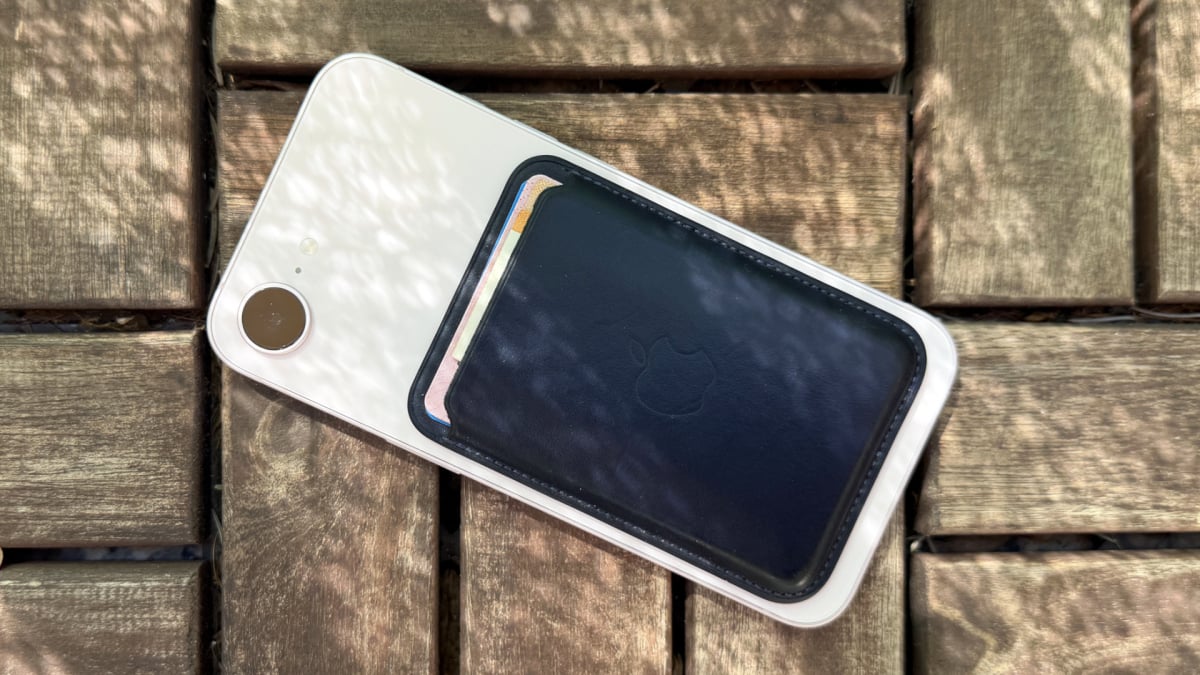
Focusing on said previous grievances, the iPhone 17e supports MagSafe, Apple’s magnetic, wireless charging tech that makes it easy to slap various accessories onto the phone.

MagSafe support means MagSafe cases are available for the iPhone 17e, too.
Credit: Stan Schroeder / Mashable
Apple sent me an iPhone 17e unit for review, and I was happily able to use my Apple Wallet and magnetic chargers with it. Apple also sent me a Clear Case with MagSafe, and while it may not be my favorite case in terms of design, it was a relief to be able to charge the phone magnetically without removing the case.
The ability to use MagSafe chargers and accessories is just about the only physical difference between the iPhone 17e and 16e, though. The iPhone 17e looks exactly the same as its predecessor, with the only difference being the new color, Soft Pink. The unit Apple sent me was in this color, and I can tell you that it is a very nice, but indeed a very soft pink.
On the front, there’s still no Dynamic Island; the Face ID sensors and the selfie camera are still hidden inside a notch on the top of the display. The dimensions have remained exactly the same (your old iPhone 16e case will work), and the weight is virtually the same (169 grams for the new model, 167 grams for the old one).

The display, unfortunately, still only goes up to 60Hz.
Credit: Stan Schroeder / Mashable
The display is still a 6.1-inch OLED that maxes out at 60Hz, and that’s very apparent if you switch from a 120Hz phone; the transitions and animations aren’t nearly as smooth on the iPhone 17e.
New chip, more storage
The biggest improvements on the iPhone 17e are inside the phone. It has a new chip, Apple’s powerful A19, which can power the latest AI shenanigans. Apple’s C1X modem has replaced the old C1 modem, though it’s hard to tell what sort of improvements this has brought.
Perhaps most importantly, the iPhone 17e starts at 256GB, compared to the iPhone 16e’s 128GB starting storage. Given that the iPhone 17e’s starting price remains unchanged at $599, this is a pretty big deal. You can also configure the iPhone 17e with 512GB of storage, but that takes the price to $799.

The Soft Pink color is the softest pink imaginable.
Credit: Stan Schroeder / Mashable
The combination of having Apple’s latest chip and a decent amount of storage means this phone will be relevant for at least four to five years. In fact, this makes it extremely similar to the $799 iPhone 17, though the A19 chip on the iPhone 17e has one less GPU core, meaning it’ll be slightly worse for gaming. If you don’t care about having the flashiest phone, and just need something that gets the work done, the iPhone 17e is a compelling choice.
When I reviewed the iPhone 16e, I was pleased with battery life and how powerful it was. But having used the phone over several months, I came away disappointed with the camera. The phone has a singular, 48-megapixel rear camera with similar specs to the iPhone 16’s. But it just wasn’t the same; it was alright in daytime, but night shots, or even shots taken in the relative dimness of my living room, just weren’t good enough.
About that camera
The bad news is that the iPhone 17e has the same camera specs as the iPhone 16e. And yes, that means no dedicated telephoto or ultra-wide camera; just a single, 48-megapixel main camera on the back. Apple says that the new A19 chips will unlock better shots, and some new camera features are indeed here, including next-gen portraits with Focus and Depth Control. But is it better where it truly matters, which is low light shots?
Here’s why insist on low light camera performance. New iPhones, especially those from the Pro line, as well as top Android phones, have spoiled the heck out of me (and probably most of you, dear readers).

One of the new camera features on the iPhone 17e is support for Apple’s next-gen portraits. I managed to capture some beautiful shots, but the iPhone 17e’s camera still seemed to struggle with focus and depth.
Credit: Stan Schroeder / Mashable
It’s easy to forget just how hard it was to get a decent low light shot on a smartphone just a few years ago. These days, however, I’m used to being able of taking a photo in a dim pub, or during an evening stroll, and have the phone automagically increase brightness and exposure while accommodating for the movements of my shaky hand. It’s hard to go back to a phone that doesn’t do that well.
So yeah, the iPhone 17e takes decent photos in broad daylight. All modern phones do. Selfies are alright, too, though nothing to write home about.

The selfie camera is still the old, 12-megapixel one. The other series 17 iPhones all have a better, 18-megapixel camera.
Credit: Stan Schroeder / Mashable
If you want to zoom in with the iPhone 17e, you can do that, but it’s purely digital: You’ll simply get a smaller cutout of what the camera sensor has captured, and while the shot quality will remain the same, the resolution will be lower.

Left:
The zoomed imag is just a digital cutout, but it can yield decent results.
Credit: Stan Schroeder/Mashable
Right:
Credit: Stan Schroeder/Mashable
Indoors, and in the evening, is where the camera’s weaknesses show. Sometimes, Apple’s Night Mode will kick in and save the day, producing a decent shot (while still not as good as the main camera on my iPhone 17 Pro Max). But sometimes you’ll just get a smudgy, blurry shot, or the tones will be overly yellow.
The photo on the left was taken with the iPhone 17e, the one on the right with the iPhone 17 Pro Max.

Left:
Credit: Stan Schroeder/Mashable
Right:
Credit: Stan Schroeder/Mashable
The good news is that it does seem that the iPhone 17e’s camera is a little better than the one on the iPhone 16e when it comes to low-light shots.
The biggest issue, perhaps, lies in expectations. Check Apple’s official tech specs for the iPhone 17 Pro, iPhone 17, and iPhone 17e, and they’re all listed as having a “48MP Fusion Main” camera, which might lead you to believe they cameras are the same. They’re not, so just have that in mind when you’re shopping for a new iPhone.
A pretty good entry-level iPhone

It’s improved, it’s affordable, but the iPhone 17 may be a better option if you need a good camera.
Credit: Stan Schroeder / Mashable
All things considered, the iPhone 17e is a decent upgrade over its predecessor, and a good choice if you want the cheapest new iPhone you can get. It’s got MagSafe, more storage, and Apple’s powerful A19 cheap. But if you need a better, more versatile camera, the iPhone 17 is a better choice.
This text is an expanded version of the hands-on iPhone 17e article which you can read on Mashable.