


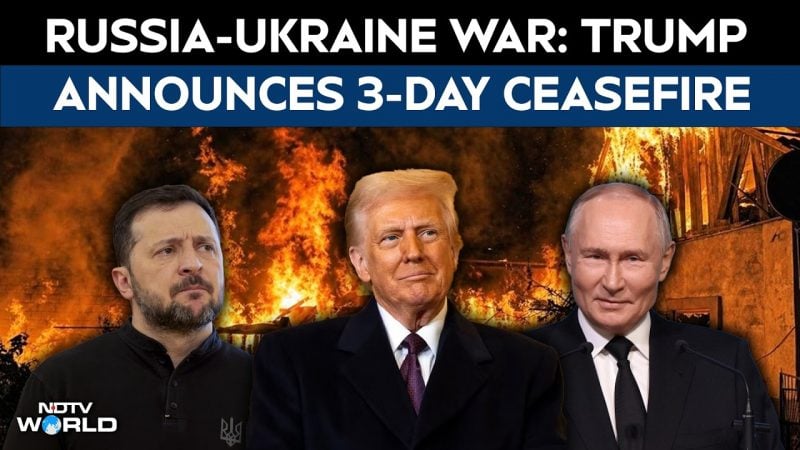
US President Donald Trump has announced a three-day ceasefire between Russia and Ukraine, set to run from May 9 through May 11. The agreement calls for a complete suspension of all military activity and a prisoner exchange involving 1,000 POWs from each side.
The timing is deliberate: May 9 is Russia’s Victory Day, the annual commemoration of the Soviet Union’s defeat of Nazi Germany in World War II. Both countries had previously accused each other of violating separate ceasefires meant to cover those same celebrations.
What the ceasefire actually involves
The terms are straightforward, at least on paper. All kinetic military activity, meaning strikes, shelling, drone operations, and ground engagements, must stop for the 72-hour window. In parallel, each side will release 1,000 prisoners of war, bringing the total exchange to 2,000 individuals.
Ukrainian President Volodymyr Zelenskyy confirmed the arrangement on Telegram, describing it as a US-brokered humanitarian step. Russia’s Defense Ministry expressed conditional support.
How crypto markets are reading the room
Within hours of the announcement, Bitcoin climbed 1.2% to $68,400 and Ethereum gained 0.8% to $3,200. Trading volume for crypto-ruble pairs jumped 15% on Bybit, suggesting that Russian-adjacent traders are repositioning around the news.
Zach Pandl of Grayscale Research offered a concise framing of the dynamic at play.
“Geopolitical pauses boost BTC as safe-haven flows from EM currencies.”
Russia has historically leaned on digital assets to navigate Western sanctions, having legalized crypto mining and cross-border payments to circumvent restrictions from the global financial system, with substantial activity reported from state-backed entities. Ukraine has also utilized cryptocurrencies to amass considerable support for its defense efforts.
The broader context investors should watch
If sanctions on Russia were to ease as part of a broader peace framework, Russian capital that has been forced into digital asset channels out of necessity could partially return to traditional finance. Conversely, a normalization of Russia’s financial relationships could also bring more legitimate institutional capital from the region into regulated crypto products.
The 15% spike in crypto-ruble volume on Bybit is worth monitoring in the days ahead. If it sustains or accelerates, it would suggest that Russian market participants view this ceasefire as more than symbolic.