


Key Takeaways
- BIP-110 miner signaling sat at 0.42% through July 2, well below its 55% activation threshold.
- Paul Sztorc’s eCash hard fork targets block 964,000, with an expected Aug. 21 launch window.
- IBIT held $44.95 billion in assets as of July 2, and its filings disclaim forked-asset rights.
One is a proposed soft fork called BIP-110. The other is a planned hard fork called eCash, backed by Drivechain architect Paul Sztorc. They share a somewhat similar timeframe. They do not share a mechanism, a purpose, or a risk profile. Here is a full breakdown of what each one is, how Bitcoin’s history informs what happens next, and what holders should actually do.
Soft Forks and Hard Forks, Explained Simply
Bitcoin’s rules can change in two structurally different ways.
A soft fork tightens the existing rules. It is backward-compatible, meaning nodes that don’t upgrade can still see the new blocks as valid, even if the new rules reject some transactions that old rules would have accepted. Soft forks activate when enough of the network adopts them, and in a clean activation, the chain stays unified.
A hard fork loosens or changes the rules in a way that isn’t backward-compatible. Nodes that don’t upgrade will reject blocks from nodes that did, and vice versa. If the network doesn’t move together, it splits into two separate chains with two separate assets. The 2017 Bitcoin Cash ( BCH) split is the clearest example. Ethereum Classic ( ETC), born from the 2016 DAO fork, is another.
That distinction is why BIP-110 is technically still a soft fork, even with real split risk attached to it, and why eCash is a hard fork by design, not by accident.
BIP-110: What It Actually Changes
BIP-110, also called the Reduced Data Temporary Softfork, was authored by Dathon Ohm. It targets the kind of data embedding used by Ordinals, inscriptions, and BRC-20-style tokens. The rule set includes several specific restrictions. New scriptPubKeys above 34 bytes become invalid, except OP_RETURN outputs up to 83 bytes. Data pushes and witness items above 256 bytes become invalid. Spending undefined witness or Tapleaf versions is blocked. Taproot annexes and oversized control blocks are restricted, along with certain Tapscript opcodes like OP_SUCCESS, OP_IF and OP_NOTIF.
The proposal grandfathers UTXOs created before activation, so coins that already exist can still move under the old rules. It’s also designed to be temporary. The active_duration written into the spec runs about one year, expiring automatically rather than becoming a permanent part of Bitcoin’s consensus rules.
Activation uses a modified BIP9 deployment with a 55% signaling threshold, well above the 95% bar used in past soft forks but still requiring broad miner buy-in. There’s no time-based timeout. The spec sets a maximum activation height near Sept. 1, 2026, and includes a mandatory signaling window just before lock-in, expected to begin around block 961,632, roughly Aug. 8. Blocks that don’t signal during that window get rejected by enforcing nodes, which guarantees lock-in no later than block 963,648 and rule activation at 965,664, according to the proposal’s own text.
The Signaling Paradox
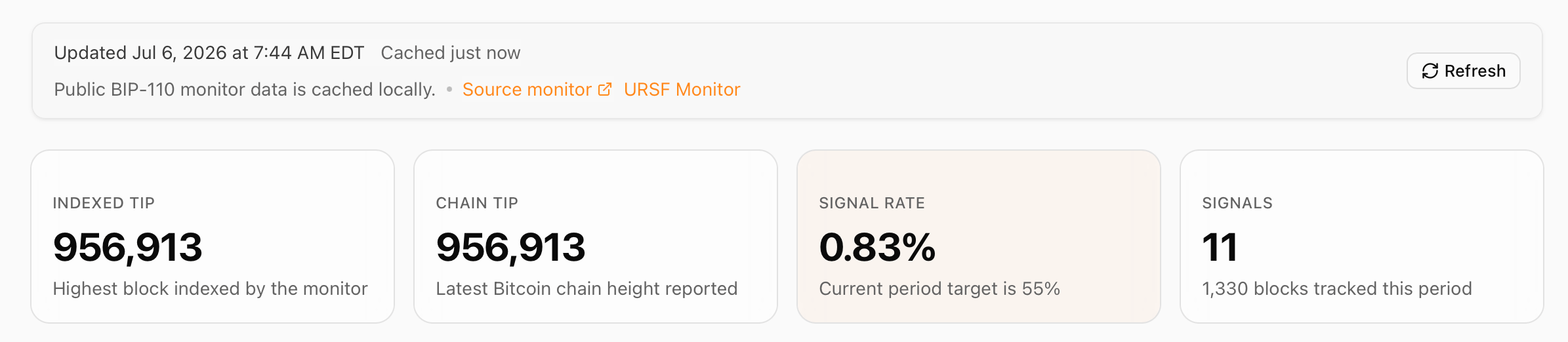
Here’s where things get confusing for anyone following the numbers. Public miner signaling for BIP-110 has been low. BGeometrics data showed daily signaling at 2% to 3% in early June. Cumulative signaling was around 0.42% through July 2, out of 9,066 blocks tracked since May 1. Over the last few days, it has grown higher with an overall rate of 0.83%. Node-level figures tell an inconsistent story too.
Early estimates put reachable- node signaling near 2.38%, while a separate measurement using a broader definition of “all known nodes” put the number closer to 14% to 23%. It has been argued that public node counts can be inflated by measurement methodology and even cheap Sybil-style duplication, and they may not reflect real economic weight anyway.
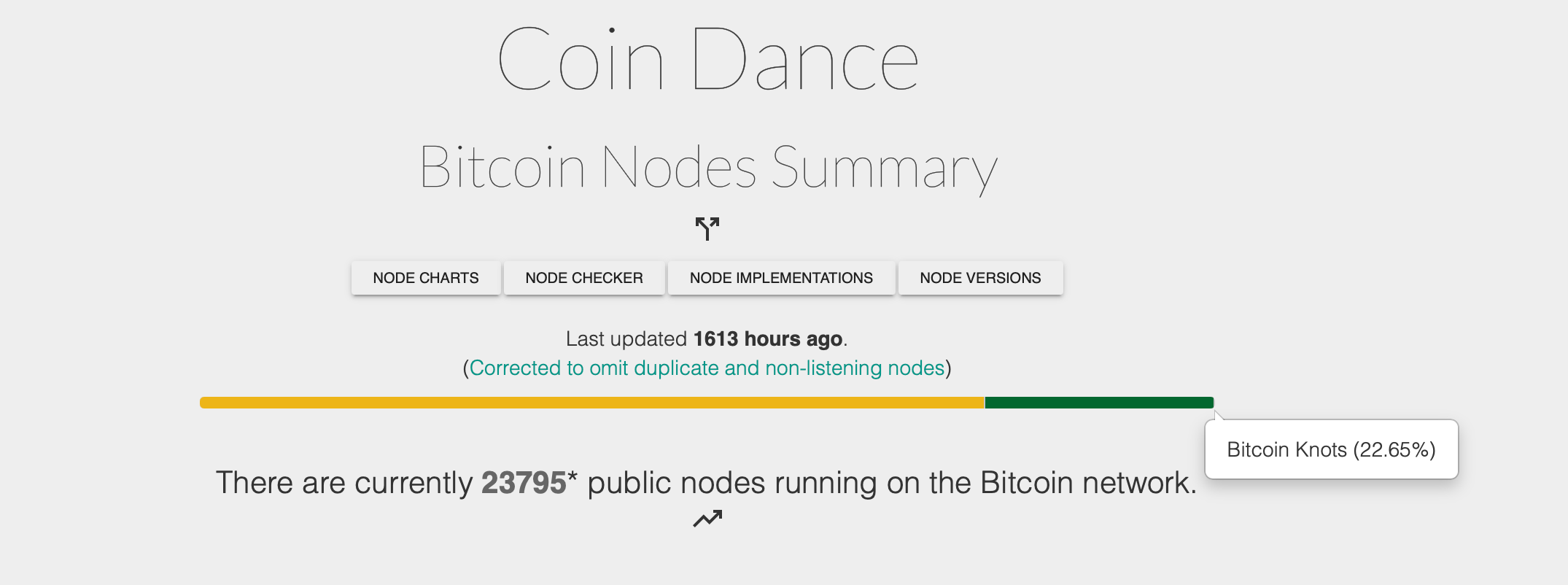
Low signaling doesn’t mean low risk. Split risk isn’t only about today’s percentage. It’s about what happens if miners, exchanges, wallets, and large holders disagree once the mandatory-signaling window actually arrives in August. Several onlookers believe BIP-110 is a soft fork with an elevated risk of a temporary or persistent chain split precisely because it’s contested. That’s the paradox: visible support looks thin, but the mechanism still creates a real coordination event with the potential for disruption.
X sentiment shows the debate split along familiar lines. Supporters, often running Knots software, frame BIP-110 as a correction to incentives distorted by prior relay-policy changes, and point to simulations suggesting the rules could filter a meaningful share of non-monetary transactions while preserving all known financial use cases. Luke Dashjr has defended it as a restoration of the protocol rather than new censorship.
Critics counter that policy-level filtering doesn’t belong in consensus, that the low threshold raises split odds in ways past soft forks avoided, and that BIP-110 sets a precedent for future contentious changes. Note that publication of a BIP inside Bitcoin’s BIPs repository is an archival step, not evidence of ecosystem agreement, a distinction the repository itself makes explicit.
eCash: A Deliberate, Separate Chain
Paul Sztorc’s eCash project is not trying to change Bitcoin from within. It’s building a new chain that exists whether or not Bitcoin’s existing infrastructure recognizes it. The split is scheduled at Bitcoin block 964,000, with estimates pointing to Aug. 21 around 15:00 UTC. Existing bitcoin holders would receive an equivalent eCash balance at that snapshot, and a coin-splitter tool is reportedly planned to separate the two assets afterward.
The chain’s core addition is Drivechain functionality, built on BIP-300 and BIP-301. BIP-300 describes hashrate escrows, and BIP-301 describes blind merged mining, mechanisms that let Bitcoin-like sidechains operate with a different security model. Materials tied to the launch describe multiple sidechains planned as live or proposed at activation.
Because eCash doesn’t need Bitcoin’s approval to exist, the real open question isn’t whether it launches. It’s whether exchanges list it, whether wallets build safe tooling around it, and whether it draws enough participation to matter once it’s live.
How Wallets and Exchanges Handled Past Forks
Bitcoin has been through contentious splits before, and the historical record offers a fairly clear view of how major service providers tend to respond.
In prior fork events, wallet users were generally told that their original coins would remain safe, but that caution was needed before moving assets on competing chains. A chief concern is replay risk, where a transaction on one chain could be copied onto another if the split lacked proper protections. Once replay protection was in place during prior forks and the competing network showed enough stability, some providers added support, while others stayed on the sidelines.
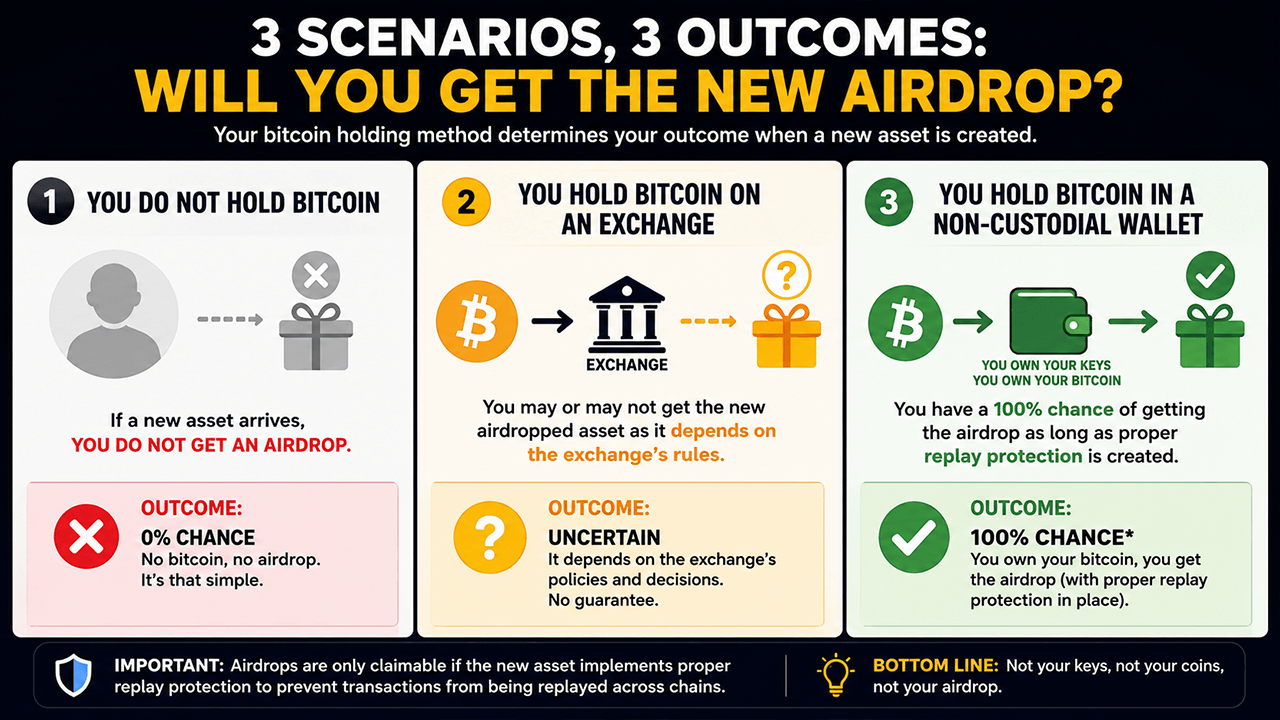
Large exchanges have typically taken a more cautious approach. Rather than immediately recognizing both sides of a split, they have paused deposits and withdrawals, watched which chain attracted more hashpower and confirmations, and waited for signs that the network was not suffering major reorganizations. In some cases, support for the weaker chain arrived only later, and sometimes only as withdrawal support rather than full trading.
The broader pattern is consistent across multiple fork cycles. Pause first. Let a dominant chain emerge. Restore services selectively once replay and reorganization risks fade. Minority chains, when supported at all, tend to arrive late, with limited functionality and no guarantee of long-term exchange backing.
Why 2026 Is a Different Environment
The 2017 fork wars happened in a market that was almost entirely retail and self-custodial. That’s no longer true. IBIT, Blackrock‘s Ishares Bitcoin Trust exchange-traded fund (ETF), reported $44.95 billion in net assets as of July 2, 2026. Strategy reported holding 847,363 bitcoin as of June 5.
IBIT’s SEC-filed prospectus states the trust will permanently and irrevocably abandon incidental rights to forked or airdropped assets unless a future SEC rule change allows otherwise. That means a large share of institutional bitcoin exposure structurally will not pass through either fork, regardless of what happens onchain. Coinbase has also said its custody product historically supports more fork assets than its retail exchange does, which means institutional and retail handling of the same event can diverge in practice.
For BIP-110, that institutional layer raises the stakes of a disorderly split beyond retail wallets alone, touching ETF pricing, custody attestations, and creation and redemption operations. For eCash, the opposite dynamic applies. If a large share of bitcoin sits behind wrappers that structurally can’t pass through the new asset, eCash could launch with less mobile economic participation than a retail-driven fork would have had in 2017.
What Self-Custody Holders Should Actually Do
For BIP-110, there’s no new asset to claim in a clean activation, so the relevant risks are compatibility and settlement confusion if the August window turns disorderly. Holders using specialized Taproot constructions or miniscript wallets should confirm compatibility ahead of the mandatory signaling window.
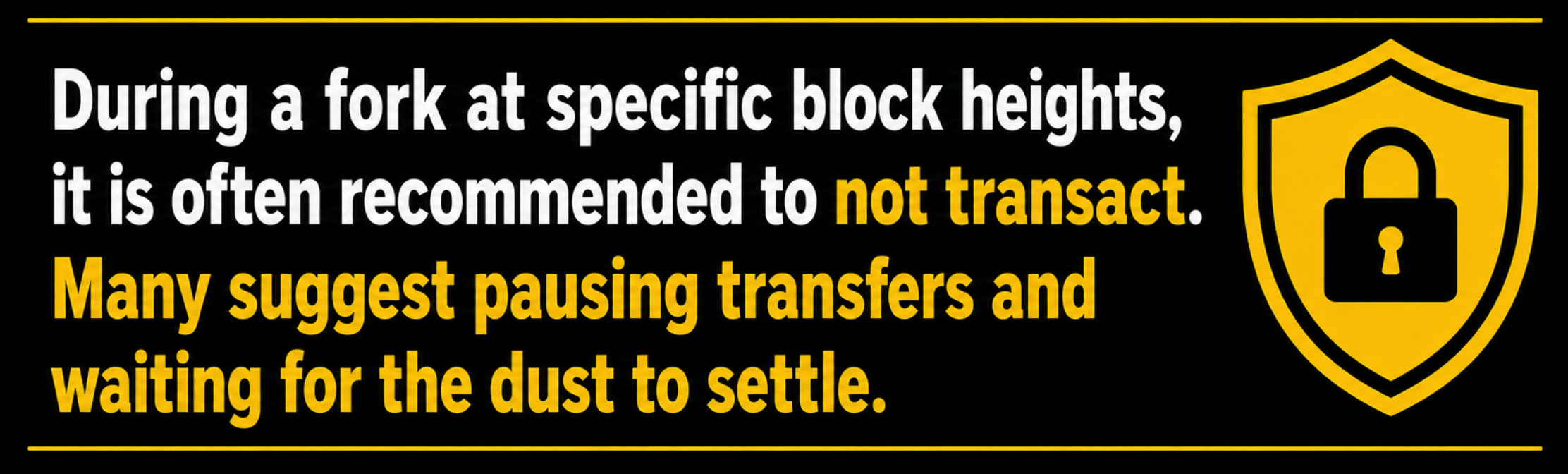
For eCash, self-custody before the snapshot is the only reliable way to preserve the option of holding the new asset, since exchanges and ETF wrappers may choose not to credit it at all. Anyone considering a claim should wait for verified wallet support and confirmed replay protection rather than rushing on day one, following the same caution a slew of businesses applied in 2017.
What Happens Next
The basic classifications aren’t in dispute. BIP-110 is a soft fork. eCash is a planned hard fork. What remains open, as of July 6, 2026, is operational: whether BIP-110’s signaling stays low into August, whether any major mining pools or exchanges shift position, whether eCash launches with verifiable replay protection, and which custodians or wrappers choose to support, ignore, or legally disclaim whatever comes out of either event.