


Key Takeaways
- Bank Leumi and Galaxy Digital target an early 2027 crypto trading launch.
- Israel’s 2026 regulatory changes may make bank-based crypto access more viable.
- The Bank of Israel must approve Leumi’s bitcoin, ethereum and solana service.
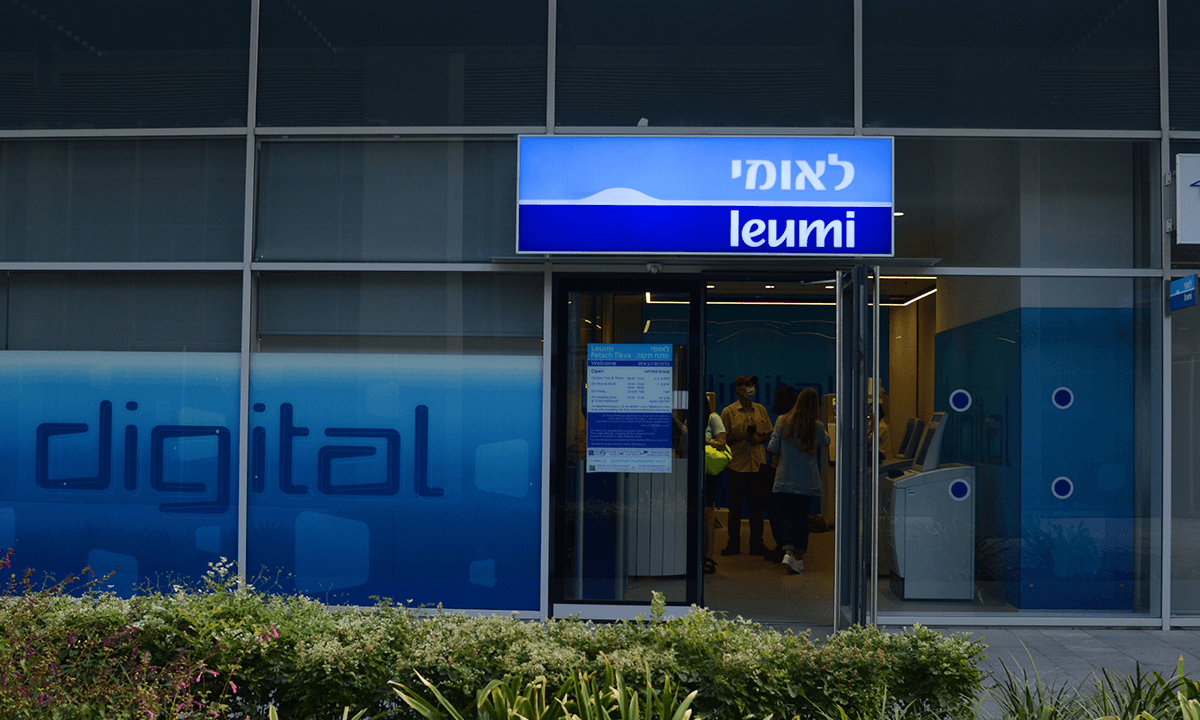
Israel’s largest and oldest commercial bank unveiled the deal this week with Galaxy Digital Inc., the Nasdaq-listed crypto firm led by Mike Novogratz. The launch target is early 2027, but the Bank of Israel still holds the kill switch.
Leumi and its mobile banking arm, PEPPER, would place the service in a sealed-off section of the Leumi Trade investment app. Customers could buy, hold, and sell selected crypto assets besides familiar products, including stocks and bonds.
That setup strips away the usual crypto obstacle course. Customers would not need accounts at standalone exchanges or personal wallets, which hold the credentials needed to control digital assets.
A Bank-Controlled Path Into Crypto
Galaxy will supply the trading and custody machinery behind the proposed service. Custody is the unglamorous but critical business of protecting assets and the private keys that move them.
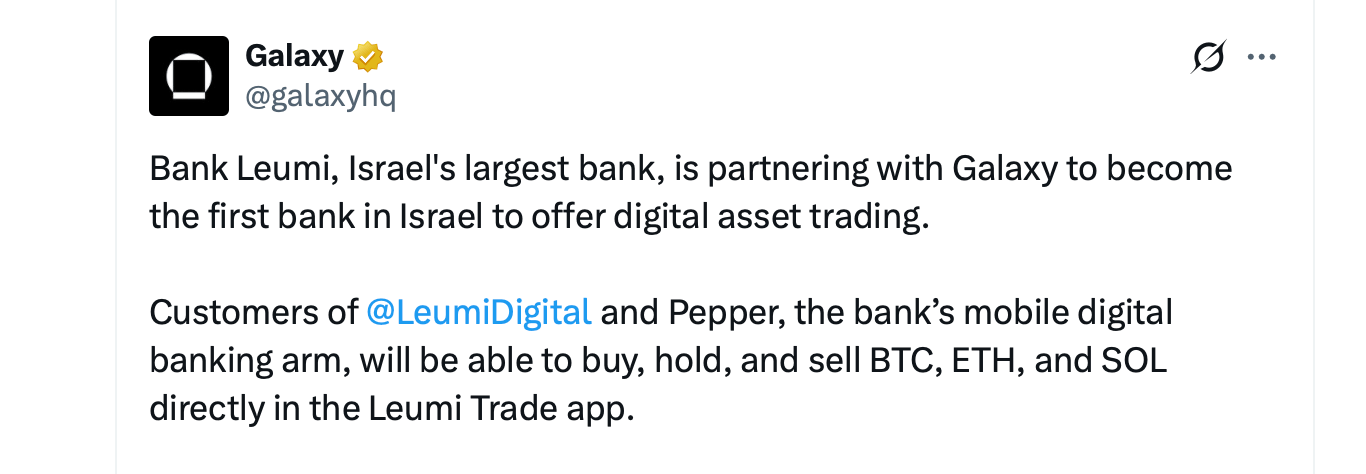
Trading would run through Galaxy’s institutional arm, a platform made for banks and large investment firms. Leumi also plans to deploy Galaxy’s custody infrastructure, formerly GK8, under a white-label arrangement. Put plainly, Leumi would run the system under its own name rather than hand clients to an outside exchange or custodian.
That distinction is the whole point: customers would face their bank, not another crypto intermediary. Leumi also expects to handle tax reporting under Israeli Tax Authority rules, although fees, trading limits, and the complete list of eligible assets remain undisclosed.
The service is not a self-custody crypto wallet. Customers would not hold their private keys. The arrangement works like a conventional brokerage account, where an institution holds securities for a client. It offers convenience, but it also puts customers inside the bank’s systems and rules. Crypto held in custody does not carry the same deposit insurance protection as shekel deposits.
A Second Attempt Under New Rules
Leumi tried this play before. In 2022, it announced a planned Paxos partnership for crypto trading through Pepper Invest. The project never reached customers because the Bank of Israel withheld regulatory clearance.
The backdrop has shifted. In mid-2026, Israel’s banking supervisors advanced draft rules that would treat some transfers from licensed virtual asset service providers as lower risk, instead of automatically flagging larger transfers for heightened scrutiny.
Israel’s Capital Market, Insurance and Savings Authority, also tightened the screws on licensed crypto firms. The proposed framework includes capital requirements, customer asset separation, and cybersecurity rules. Draft standards for public-facing tokens favor larger, established assets that meet market-value, decentralization, and international-recognition tests.
Those changes could make banks less afraid of crypto on-ramps and off-ramps, the pipes that move money between the banking system and digital asset markets.
What looked impossible four years ago is now being tested as a regulated bank product, with risk controls and tax reporting replacing the freewheeling exchange model that kept customers and compliance officers on the sidelines.
Security and Competition Take Center Stage
Galaxy bought Israel-founded GK8 in 2023 for about $44 million from Celsius Network’s bankruptcy proceedings. GK8’s systems keep key-signing functions away from internet-connected systems, shrinking the remote attack surface that has repeatedly haunted crypto firms.
The platform also uses multi-party controls, so transactions can require more than one approval and can be boxed in by preset rules. For a bank, those controls may satisfy compliance and security demands that exceed the standards of a typical retail crypto platform.
Leumi is making this move in a country already saturated with crypto interest. More than 25% of Israelis have held or used digital assets in recent years, according to industry estimates. Chainalysis data showed Israel received an estimated $22 billion in onchain crypto value in the 12 months ending June 2025.
The proposed service could force the hand of other major Israeli banks, including Bank Hapoalim, Mizrahi-Tefahot, and Bank Discount, none of which had publicly announced comparable retail trading offerings by mid-August.
For now, Leumi’s plan is a proposal, not a live product. The pressure points are the Bank of Israel’s decision, the final asset list, fees, external-wallet withdrawal rules, and the customer education required before the planned early 2027 launch.