


Flexibility matters when resizing windows across any device. But while announcing its updates, Apple also dropped major hints that all but confirmed new hardware—it showed iPhone apps running on an iPad or a Mac could resize to a suspiciously specific shape that matched the rumored inner display dimensions of Apple’s upcoming folding phone.
Designed to Flow
When Apple showed off the iPhone Duo, everything clicked. Its passport-shaped display bucks the trend of iPhones and their rivals growing taller over the years. The Duo is wider and almost squat, and when opened, it naturally defaults to landscape, echoing the iPad Mini display.
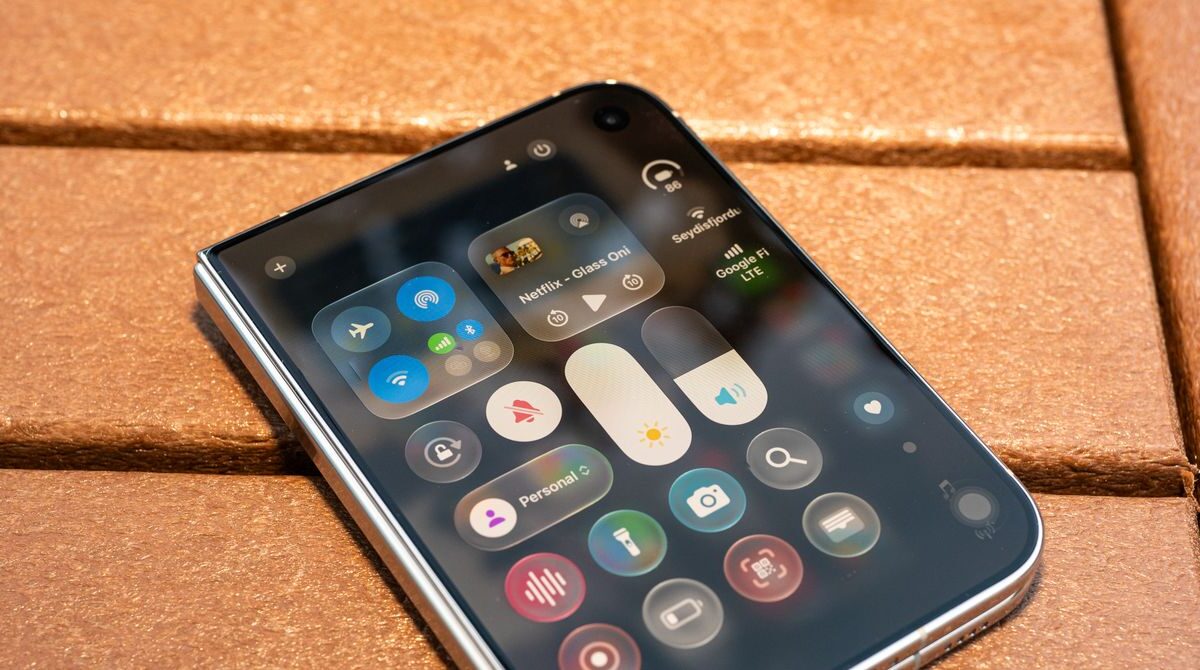
Apple being Apple, it wanted to avoid the jarring jolt between displays that’s often evident on rival foldables, so it made content appear to move seamlessly from one screen to the other. That begins with the hardware. As Molly Anderson, Apple’s vice president of Industrial Design, said at the September keynote: “To achieve this continuity, we designed iPhone Duo around a consistent aspect ratio that is the same across both displays.” But it’s the software—rooted in Liquid Glass—that sells the illusion.
The most arresting element is a fancy animation, which various folks in the Android space are now busy being “inspired” by. It reinforces the idea of a flowing interface. Meanwhile, Liquid Glass freed Apple from being prescriptive about where essential controls live. On the Duo, they sit at the side. When the phone’s closed, that frees up space for content. When it’s open, the controls stay in a consistent spot, so you never have to hunt for them. Reorient the device, and everything settles into the most appropriate place.
Courtesy of Apple
That’s form following function, not function being subservient to form. This device and its flexible interface don’t strictly need the Liquid Glass design language, but the two feel made for each other. Liquid Glass finally makes sense on the iPhone Duo—and with Apple’s other refinements, it’s starting to make sense elsewhere, too.
Clarity of Purpose
How much of this is happenstance is hard to say. Given Apple’s lead times, pure coincidence seems unlikely. And even if Liquid Glass wasn’t made with the Duo in mind, it adapts to it.
Liquid Glass feels more considered. It’s increasingly tuned for individual devices rather than governed by a “universal” aesthetic forced onto them all. The result is operating systems that feel solid rather than fragile, with interfaces less likely to fight content for your attention. On Macs and iPads, the Liquid Glass revamp now looks more like a love letter to Aqua—Apple’s water-themed interface introduced in 2000. On the iPhone, it’s usable again. On the Duo, it’s a delight.
That’s not to say it’s perfect. “There’s some weirdness that hasn’t been fully resolved, and there needs to be a consistency to all these materials or the metaphors break down,” McCarthy says. “But overall, Liquid Glass is vastly improved.”
And it’s worth remembering that while the Duo is new, Liquid Glass is relatively young, too. As developer Steve Troughton-Smith wrote, “For some iPhone apps, even with keen developers, it will take six months to a year of work to properly support iPhone Duo. A lot of developers are still trying to finish the Liquid Glass transition they started last year.”
A useful reminder that transitions take time. But at least now, Apple’s vision looks clear.