


It takes just a skim of Eclipse’s recent investments to see where this venture firm’s interests lie — and where it is headed.
The Palo Alto-based VC, which saw its median deal size explode over the past several years, has poured an increasing amount of money into the “physical world.” Its deals include electric boat developer Arc , buzzy battery recycling and material firm Redwood Materials, self-driving construction vehicle startup Bedrock Robotics, autonomous vehicle tech company Wayve, and industrial robotics lab Mind Robotics.
With $1.3 billion in fresh capital — which is split between a $591 million early stage, incubation fund and one more oriented towards growth startups — Eclipse is zeroing in on what partner Jiten Behl describes as the next big technological era.
“Over the last two decades, we’ve seen multiple waves of innovation,” Behl said, listing the internet, mobile cloud, and social media eras. “This is the first time where stuff is going to move from our screens into the physical world; we’re going to see advanced levels of intelligence, along with actual actions, in terms of, solving problems in the real, physical world.”
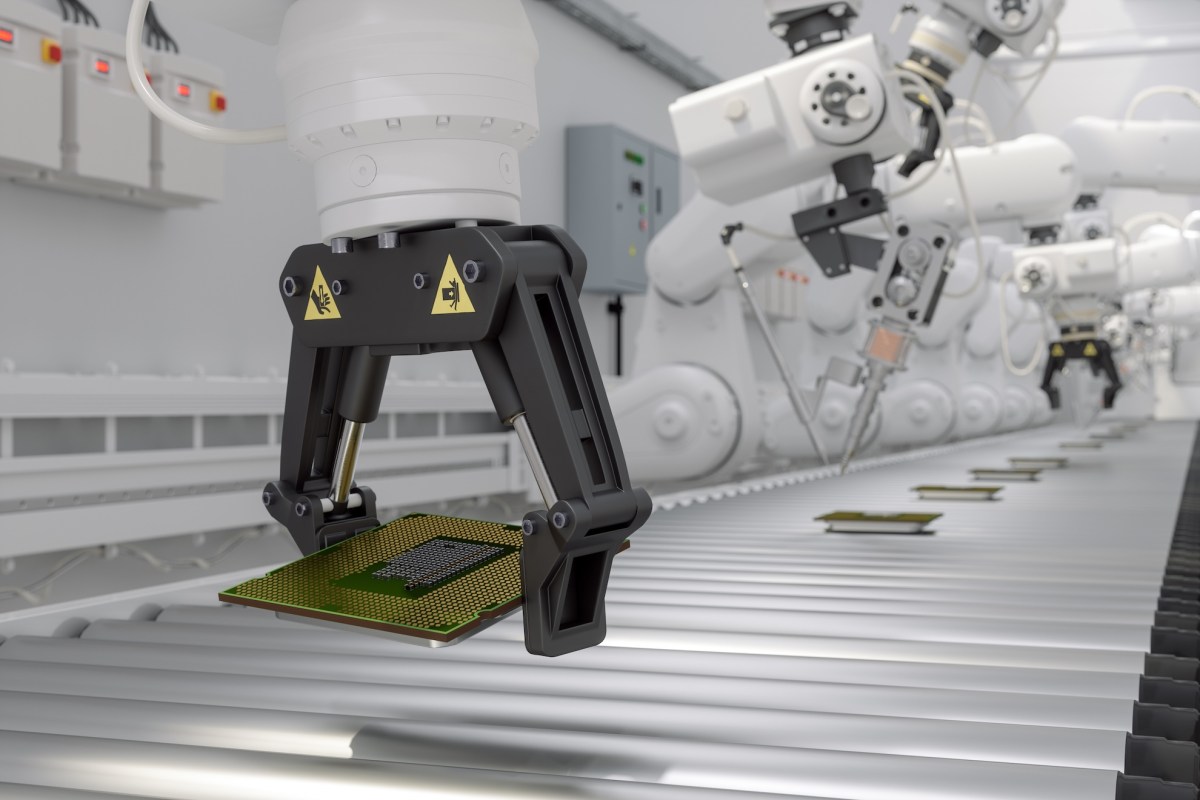
AI and the physical world have collided; the ubiquity of the term physical AI is just one signal. Behl said this era is being propelled by a confluence of talent, technological advancements, demand, and policy. And, of course, capital.
“We have a nice war chest to go and make a serious dent in the market and support the companies in the right way across the life cycle,” he said.
Eclipse isn’t breaking new ground by investing in physical AI. It is after all, the next shiny new thing to invest in. How Eclipse picks startups is worth noting. The VC is looking to invest across all physical sectors, including transportation, energy, infrastructure, compute, and defense. The interesting part is, as Behl described it, is a strategy to build a web, or ecosystem of startups in overlapping fields that will likely become partners as they scale.
Techcrunch event
San Francisco, CA
|
October 13-15, 2026
“Scale is so important, and if you can put it together in a way where companies partner early on to build scale, to build proof points, and it just then enables them to go after the next set of demand,” Behl said, explaining that portfolio companies will partner with each other directly, but hopefully, also work with each other’s partners.
In some cases, those startups will be incubated within the confines of Eclipse. Behl said Eclipse plans to build companies from this new fund. And while he wouldn’t give too many hints, he did confirm that process has already started.
“We’re definitely working on a couple of really cool ideas,” he said, noting that Eclipse is particularly interested in startups that work across enterprises.
“The next insight is like, how do you connect these sectors? How do you build scale across sectors? And how do you use the data across sectors to build that moat?” he posed, adding data would be used to train smarter AI models to benefit a broader group. “That’s sort of the general thesis that we’ve been working on.”