

Key Takeaways
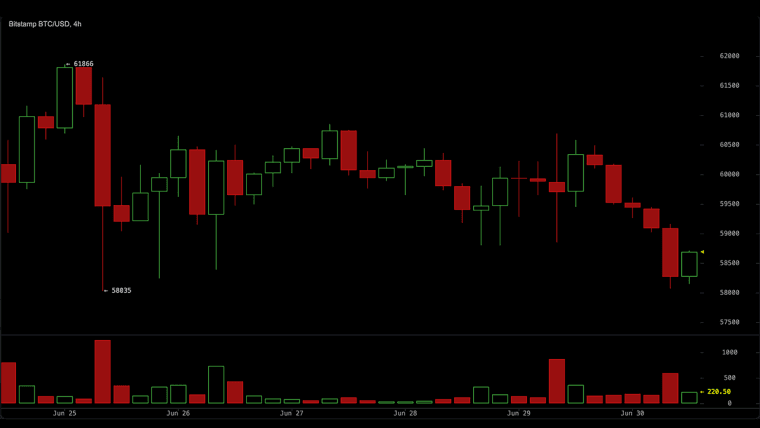
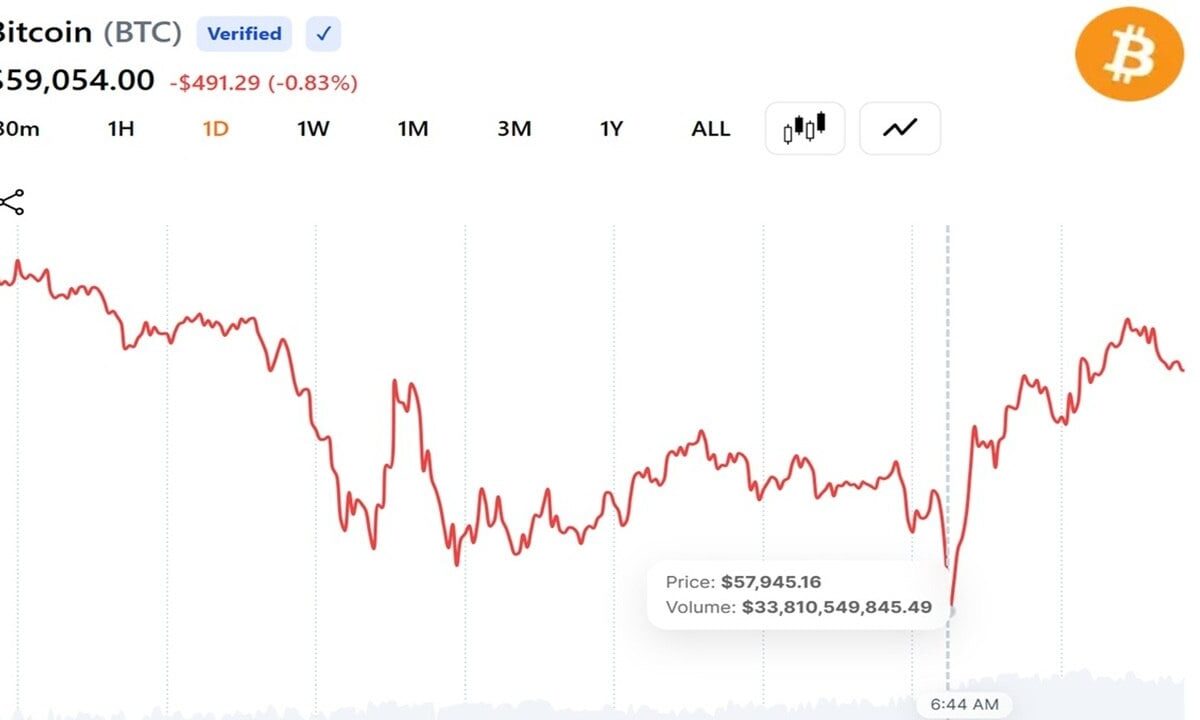
- Bitcoin fell below $58,000 on June 30, its first trip under $60,000 since 2024, extending 2026 losses to 34%.
- A Strategy financing overhaul, $950 million Mt. Gox wallet move, plus continued ETF outflows have fueled the drop.
- Third-quarter direction hinges on whether spot demand stabilizes.
A Brutal June Caps a Losing Half-Year
Bitcoin entered June trading above $73,500 and shed more than 20% over the month. It closed yesterday at $58,400, leaving its 2026 losses at 34% and its market capitalization below $1.2 trillion. The drop marked the first time bitcoin had traded under $60,000 since 2024, and it sits roughly 50% below the $126,000 all-time high (ATH) set in early October 2025.
Over the preceding 24 hours, forced selling wiped out about $91.5 million in long positions against just $12.7 million in shorts, a lopsided ratio revealing just how heavily traders had bet on a rebound.
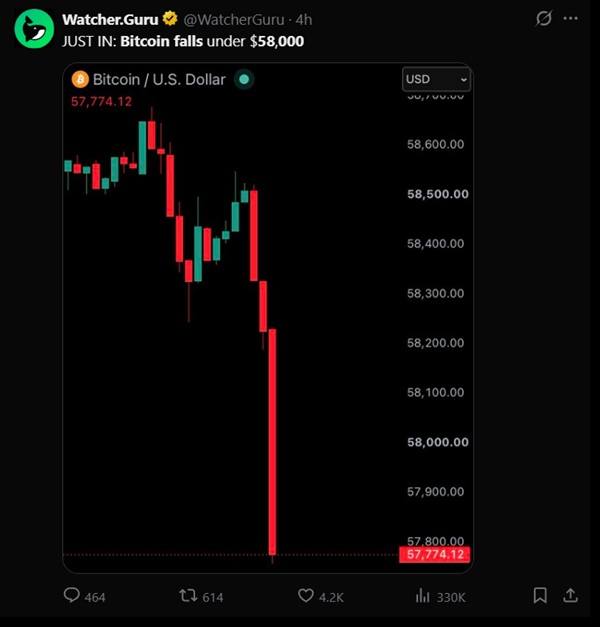
Much of Tuesday’s selling traced back to Strategy Inc. (Nasdaq: MSTR), the largest corporate holder of bitcoin. Bloomberg reported that investors reversed an initial vote of confidence in a financing overhaul led by co-founder Michael Saylor, as attention shifted to the company’s newfound flexibility to sell bitcoin and prioritize balance-sheet management over relentless accumulation.
Strategy had earlier disclosed its first-ever sale of the asset, unsettling holders who had long treated the firm as a permanent buyer. Adding to the pressure, spot bitcoin exchange-traded funds (ETFs) logged their eighth straight day of outflows, and a wallet linked to the defunct Mt. Gox exchange moved roughly $953 million in BTC, stirring supply fears.
Macro Headwinds and a Widening Gap With Stocks
Broader conditions offered little relief as sticky inflation and a stronger dollar have pushed expectations for Federal Reserve rate cuts further out, sapping demand for risk assets. The selloff also highlighted crypto’s sharp decoupling from equities, with the Nasdaq Composite climbing more than 12% over the same six-month stretch (and 21% over Q2) in which bitcoin fell by roughly a third.

The total crypto economy ended June just above $2.1 trillion, down from a peak of $4.3 trillion in early October 2025. The reversal has been swift and broad, with few corners of the market spared as leverage unwound and buyers stepped back.
Analysts remain divided on what comes next as some believe a pullback and stretched bearish positioning have historically preceded rebounds, while bears note that persistent ETF outflows and Strategy’s mixed accumulation/selling signals have eliminated two of the market’s most reliable sources of demand.