


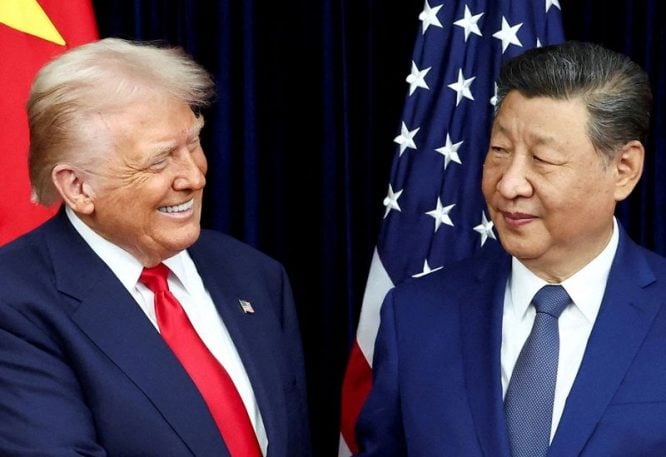
The world’s two largest economies are heading into another high-stakes summit, and investors are scanning the horizon for anything resembling good news. President Donald Trump and Chinese President Xi Jinping are set to meet in Beijing, with markets hoping the talks produce concrete steps toward de-escalation after months of escalating tariffs, semiconductor sanctions, and geopolitical friction.
The stakes on the table
The US entity list now bans over 1,000 Chinese companies from accessing advanced chips and equipment, a restriction regime that has been building since 2016. Semiconductor export controls remain the sharpest edge of American technology policy, and Beijing views them as an existential threat to its industrial ambitions.
A US arms sale to Taiwan worth $11.1 billion in December 2025 has intensified China’s demands for restraint on future military deals. For Beijing, arms sales to Taiwan aren’t a trade irritant. They’re a sovereignty issue, and one that makes compromise on other fronts harder to reach.
Trump is expected to push for reduced US dependence on China’s dominant position in rare earth minerals, the critical inputs for everything from electric vehicles to missile guidance systems.
A year-long truce running out of clock
The backdrop to these talks includes a year-long tariff truce struck at the October 2025 Busan meeting. That truce is set to expire, and China is pushing for an extension. Renewed tariffs imposed since early 2025 had already rattled supply chains and investor confidence before the Busan pause.
Proposals on the table reportedly include an increase in Chinese purchases of US goods in agriculture and energy, sectors where deal-making has historically been politically palatable for both sides.
Chinese foreign direct investment in the US has plummeted 90% from its peak during the 2014-2017 period. That decline is significantly steeper than the 57% global drop in FDI over a comparable timeframe.
What this means for investors
Market observers are bracing for two scenarios. If the summit produces a meaningful agreement, whether that’s a tariff truce extension, a framework for semiconductor negotiations, or warm body language between the two leaders, Chinese equities could catch a bid. The less pleasant scenario: no significant agreements, a breakdown in talks, or new provocations on either side would likely mean renewed pressure on Chinese stocks, disruptions in global supply chains particularly in tech and manufacturing, and a fresh round of risk-off positioning across emerging markets.
For crypto markets specifically, heightened US-China tensions have historically correlated with risk-off sentiment across global markets, including digital assets. A deteriorating trade environment also tends to strengthen the dollar, which creates headwinds for Bitcoin and other crypto assets denominated against it.
Whether the tariff truce gets extended, whether semiconductor restrictions are modified, and whether FDI flows show any signs of stabilizing will matter far more than any handshake photo.