


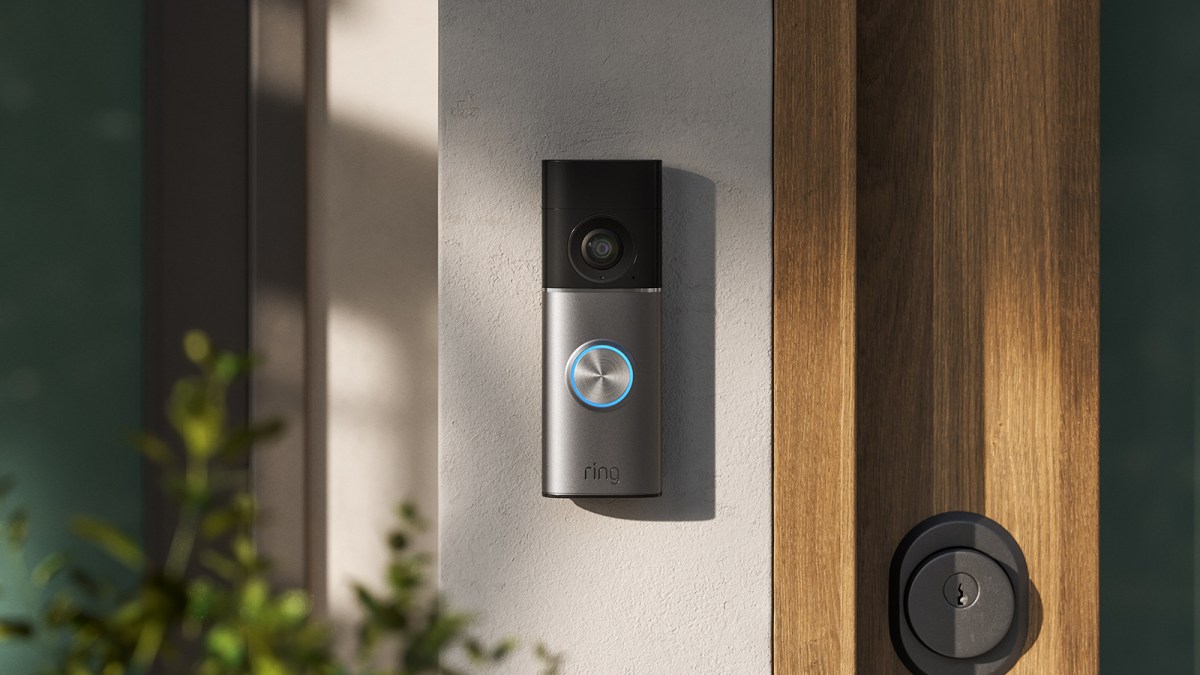
Amazon’s smart home division Ring said on Wednesday that it is adopting a new encryption standard called TAKE (Throw Away the Key Encryption) as the default setting for video encryption and user control. The company says this standard lets it protect user privacy without relying on end-to-end encryption, which can restrict some features such as video search, video description and shared trusted users.
Ring says the standard involves using a rotating set of encryption keys that are temporarily stored in the cloud and can only be accessed by the company to power features that users may have active. Once the request is completed, the company will delete the keys within 24 hours.
Ring said the standard lets it temporarily decrypt and process users’ videos so it can offer cloud-based features like Smart Alerts, which can notify users when people, vehicles, or packages are in the camera’s field of view.
“With TAKE, Ring delivers the intelligent features you love and rely on, like Smart Alerts, and then throws away and deletes the encryption key. Only you retain the keys to your video,” the company said in a blog post.
Amazon’s white paper detailing the standard notes that it was developed with a base of Messaging Layer Security (MLS), an open messaging standard developed by the Internet Engineering Task Force. The company said that with TAKE, if you lose access to your device and buy a new one, you can authenticate yourself by standing near the Ring cameras to recover your encryption keys. Separately, you can use a passphrase, cloud-based backups, another approved device, or passkeys to recover your account.
The company said that TAKE will be gradually rolled out to customers from September, and will be the default standard worldwide. Users can still manually choose end-to-end encryption instead of TAKE.
Over the last few months, Ring has received a lot of criticism for its “Familiar Faces” feature, which uses facial recognition to identify visitors. In June, a class action lawsuit accused Amazon of storing images of passersby without consent.
When you purchase through links in our articles, we may earn a small commission. This doesn’t affect our editorial independence.