


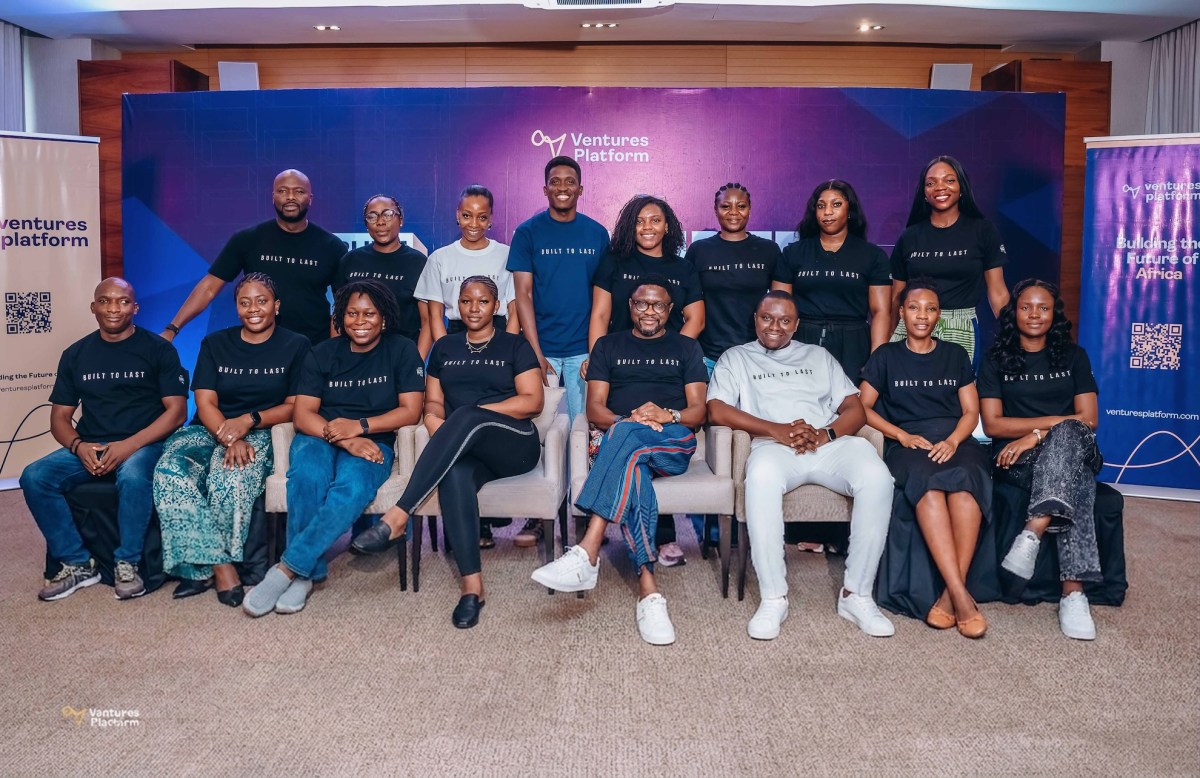
Ventures Platform has raised an oversubscribed $84 million second fund as the Pan-African venture firm expands beyond its home market of Nigeria with a strategy shaped by a tougher, more selective venture market.
The firm plans to back early-stage founders across a range of sectors, including fintech, healthcare, SaaS, and other areas “where technology can address essential needs and build large, enduring businesses,” Kola Aina, the firm’s founding partner, told TechCrunch.
Of course, AI is part of that thesis.
“We’re particularly interested in where AI changes the economics of serving African markets,” he said, pointing to its potential to reduce the cost of delivering services and help overcome labor shortages. “For us, AI is most interesting when it is not simply a feature, but an enabler of an entirely different cost structure, business model or market.”
Ventures Platform, which is headquartered in Nigeria, previously raised a $46 million Fund I in 2022 with a similar, albeit more limited scope. The first fund focused primarily on pre-seed and seed rounds.
“It allowed us to demonstrate that our approach to early-stage investing in Africa could work at an institutional scale and laid the foundation for Fund II,” Aina said.
Now, Ventures Platform is back with a larger fund and wider geographic mandate.
The firm is expanding its focus beyond Nigeria and has already written checks from Fund II to five companies based in Kenya, South Africa, and Egypt. Check sizes will be up to $3 million, and the firm hopes to deploy the capital over the next three to four years.
“We are particularly interested in markets where technology can expand access to essential products and services, address critical infrastructure gaps, and create entirely new categories of consumption,” Aina said.
The fundraising process took about a year and a half, with Aina describing the environment as more “selective” than it was when Ventures Platform raised Fund I.
“LPs are asking harder questions about performance, portfolio construction, liquidity, manager discipline, and differentiation,” Aina said.
From his perspective, the market is still cautious, as LPs demand more evidence that managers can turn portfolio value into realized returns. Capital is no longer assumed to be unlimited, especially after many LPs felt burned by the venture bust a few years ago.
“The result is a much greater appreciation for capital efficiency, stronger fundamentals, governance, regulatory engagement, and the importance of building businesses that can survive different funding cycles,” he said. “There is a much clearer understanding that building valuable companies and generating venture returns require more than simply raising successive rounds of capital.”
This year, African startups have raised around $930 million across more than 200 deals. Last year, startups on the continent raised $1.16 billion across 447 deals.
As TechCrunch previously reported, the venture market is now a barbell — with LPs giving capital to a handful of firms at the top and to emerging managers with a track record they can trust.
“Three years ago, there was still a significant amount of curiosity around the African opportunity. Today, LPs expect proof,” Aina said, adding that this discipline is actually healthy for the market.
“The conversation has moved from ‘Why Africa’ to ‘Why you and how exactly are you going to generate returns,’” he said, adding that simply being a Pan-African fund is no longer a strategy. LPs want to know more about access to top talent, how funds are navigating individual markets, and “why you have the right to win,” Aina said. “That combination of local depth and global connectivity is increasingly important as the ecosystem matures.”
In fact, he said that is the biggest edge his firm offers. This latest generation of founders and fund managers has seen what it is like to deal with both an abundance of capital and hardly any at all. He said it’s more important than ever to understand the institutional and market realities founders face while also connecting companies to regional and global networks as they scale.
That pitch seems to have resonated with existing investors: 70% of Fund I’s LPs returned for Fund II. Backers include the European Bank for Reconstruction and Development, Norfund (Norway’s development finance institution), and Ghana’s Ashesi University Foundation.
“We don’t take that for granted,” he said.
This piece was updated to reflect the amount of the fund raised.
When you purchase through links in our articles, we may earn a small commission. This doesn’t affect our editorial independence.