


Key Takeaways
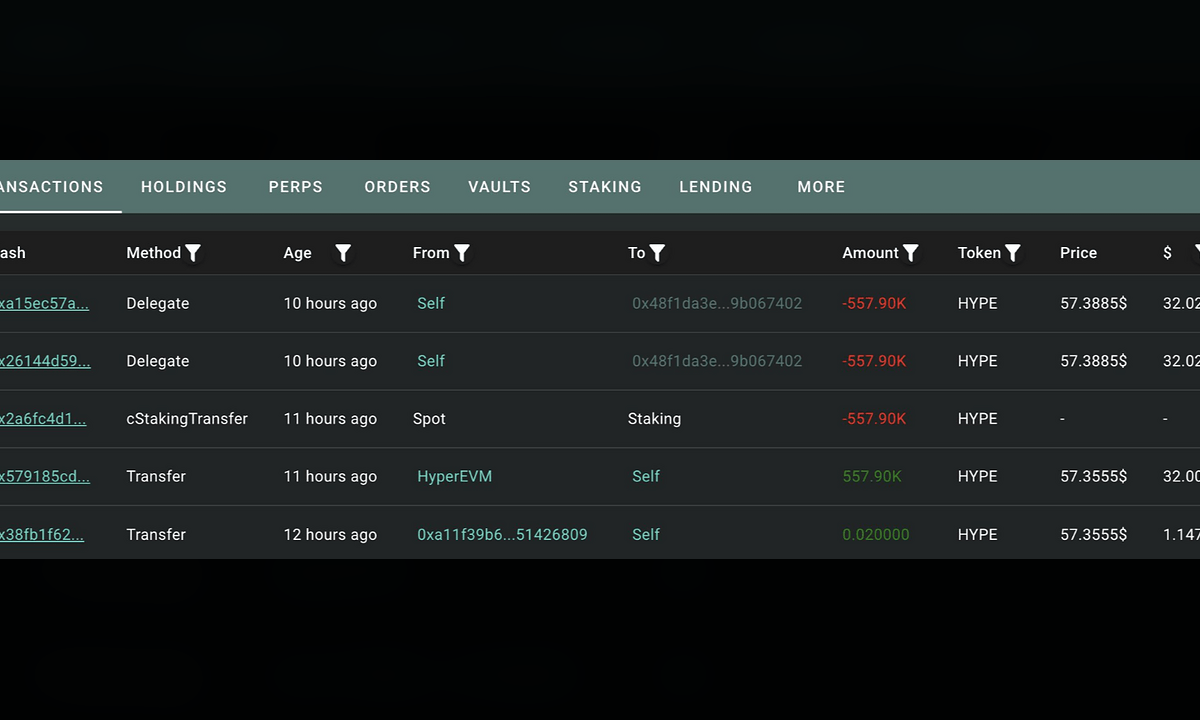
- A whale staked 557,902 HYPE ($32.87 million) on Hyperliquid after receiving the tokens from FalconX.
- HYPE trades near $57-59, down from its June 16 all-time high of $76.67.
- Hyperliquid’s total staked HYPE has climbed toward 436 million tokens amid rising staking activity.
FalconX Transfer Lands Directly in Staking
On-chain data flagged the transaction Saturday, tracing 557,902 HYPE tokens moving from FalconX, an institutional digital-asset liquidity provider and prime broker, into a wallet that staked the full amount on Hyperliquid. The transfer’s size and immediate conversion into a staking position suggest an institutional or high-net-worth participant taking a long-term position rather than trading around short-term price swings.
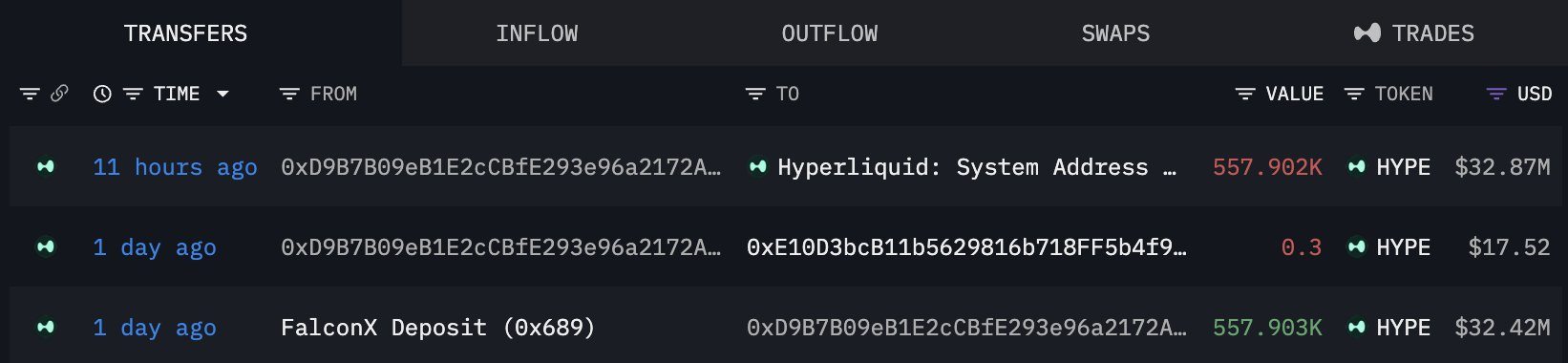
FalconX serves as a liquidity and execution venue for institutional clients, meaning large token transfers routed through its infrastructure often represent over-the-counter (OTC) deals rather than open-market purchases.
HYPE Price Under Pressure Since June Peak
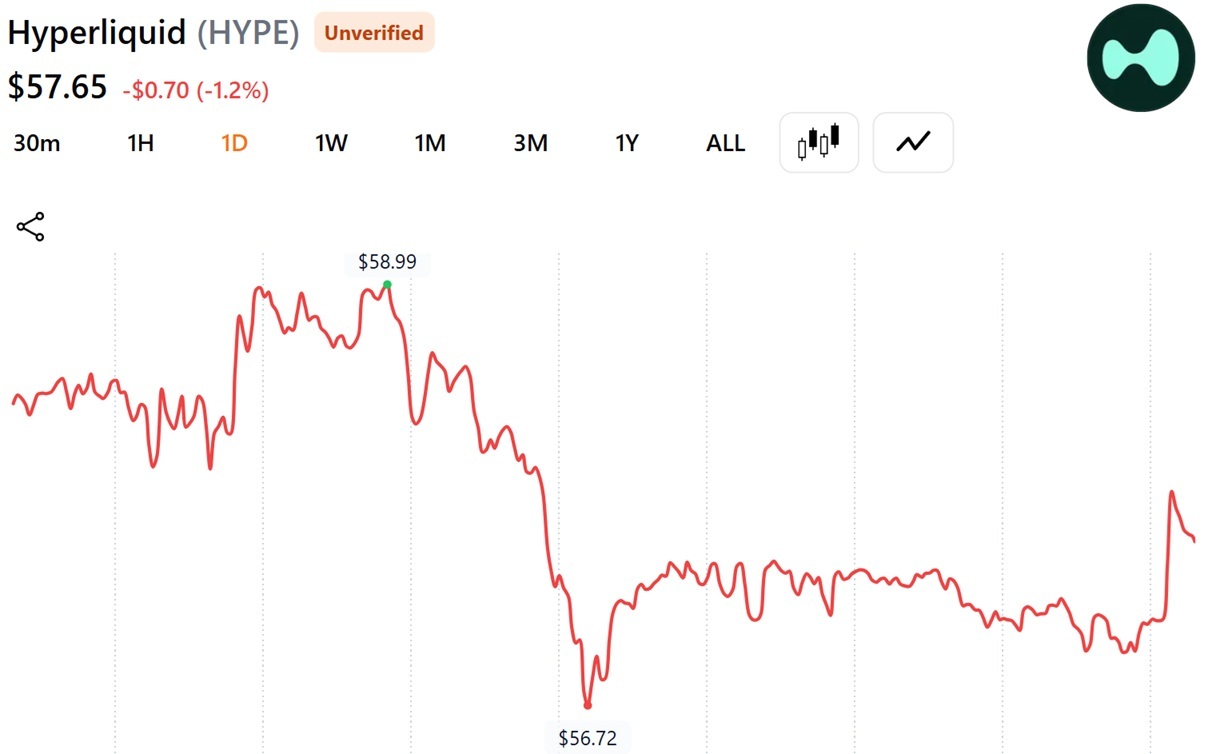
HYPE has been trading in the $56 to $59 range as of Saturday, down roughly 24% from its all-time high of $76.67 reached on June 16. Despite the pullback, the token remains one of the year’s standout performers, up more than 130% year-to-date as Hyperliquid has grown into one of the largest decentralized derivatives exchanges by trading volume.
The token’s decentralized finance (DeFi) ecosystem has continued attracting deposits even as the price corrects, with the volume of total staked HYPE sitting upward of 436 million tokens to date.
Not only that, the aforementioned transfer is not the first large institutional staking move Hyperliquid has attracted, given asset manager Bitwise staked $114 million in HYPE tied to its spot HYPE ETF just last month, part of a broader pattern of institutions parking large token positions in staking rather than treating HYPE as a purely tradeable asset.
Why Staking Activity Matters for Hyperliquid
Staking HYPE contributes to Hyperliquid’s validator security and governance system, a mechanism the exchange expanded last year specifically to push decentralization further as the platform scaled. Stakers typically earn a share of network fees generated by the exchange’s trading activity. A large staking deposit like Saturday’s transfer effectively removes those tokens from immediately available circulating supply, a dynamic that can tighten liquidity if sustained across many wallets.
Hyperliquid’s model differs from most decentralized exchanges in that its order book, matching engine and staking layer all run on a purpose-built blockchain rather than a general-purpose smart contract platform bolted onto an existing chain. That architecture has let the exchange offer execution speeds closer to centralized platforms like Coinbase or Binance while still settling trades onchain, a combination that has drawn both retail volume.